
Namma Metro
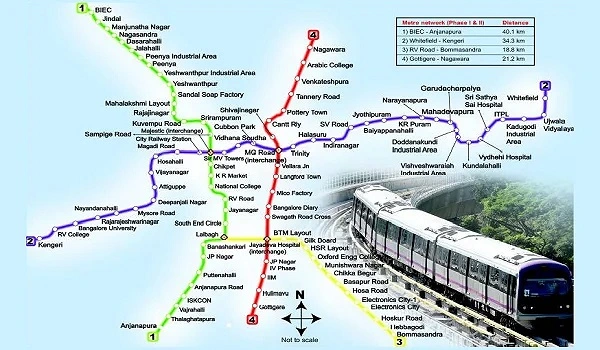
The Bangalore Metro, widely recognized as Namma Metro, stands as a major pillar of urban mobility in the city. Designed to improve travel efficiency and support sustainable transit, it has grown to become the second-longest operational metro network in India, spanning over 76 km. Since 2011, it has been known for introducing the first underground metro network in South India, integrating elevated tracks, at-grade lines, and underground corridors to ensure uninterrupted movement across key city zones. Operated and expanded by the Bangalore Metro Rail Corporation Limited (BMRCL), the metro system continues to evolve under structured phases, including Bangalore Metro Phase 2 and Bangalore Metro Phase 3, with the goal of connecting every significant residential and commercial district.
Bangalore Metro at a Glance
The metro currently has 68 operational stations, categorized into:
- 1 at-grade station
- 8 underground stations
- 59 elevated stations
This network structure enables smooth transit and reduces travel delays caused by dense traffic patterns across the city.
Ticketing Structure
- Minimum fare: ₹10
- Maximum fare: ₹45
- Monthly passes: ₹1,000 to ₹3,000 for frequent commuters
For easy planning, commuters can refer to the Namma Metro route map and check updated frequency schedules through the official metro website or mobile app.
Operational Metro Lines
Purple Line
- Whitefield
- Channasandra
- Kadugodi
- Pattandur Agrahara
- Sri Sathya Sai Hospital
- Nallurhalli
- Kundalahalli
- Sitharama Palya
- Hoodi Junction
- Garudacharapalya
- Mahadevapura
- Krishnarajapuram
- Benniganahalli
- Baiyappanahalli
- Swami Vivekananda Road
- Indiranagar
- Halasuru
- Trinity
- Mahatma Gandhi Road
- Cubbon Park
- B. R. Ambedkar Station (Vidhana Soudha)
- Sir M. Visvesvaraya Station (Central College)
- Nadaprabhu Kempegowda Station (Majestic)
- Krantivira Sangolli Rayanna Railway Station
- Balagangadharanatha Swamiji Station (Hosahalli)
- Vijayanagara
- Attiguppe
- Deepanjali Nagara
- Mysuru Road
- Nayandahalli
- Rajarajeshwari Nagar
- Jnanabharathi
- Pattanagere
- Kengeri Bus Terminal
- Kengeri
- Challaghatta
Green Line
- Madavara
- Chikkabidarakallu
- Manjunathanagara
- Nagasandra
- Dasarahalli
- Jalahalli
- Peenya Industry
- Peenya
- Goraguntepalya
- Yeshwanthpura
- Sandal Soap Factory
- Mahalakshmi
- Rajajinagara
- Mahakavi Kuvempu Road
- Srirampura
- Sampige Road
- Nadaprabhu Kempegowda Station (Majestic)
- Chickpete
- Krishna Rajendra Market
- National College
- Lalbagh Botanical Garden
- South End Circle
- Jayanagar
- Rashtreeya Vidyalaya Road
- Banashankari
- Jaya Prakash Nagar
- Yelachenahalli
- Konanakunte Cross
- Doddakallasandra
- Vajarahalli
- Thalaghattapura
- Silk Institute
Metro Routes Set to Widen Their Reach
Yellow Line
- Connects RV Road to Bommasandra
- Enhances access to major employment clusters including Electronic City
- Expected operational date: 2nd April 2025
Blue Line
The Bangalore airport metro line, also known as the Blue Line, will link KR Puram to Kempegowda International Airport, ensuring seamless airport access. Important stations include:
- KR Puram
- Kadubeesanahalli
- Bellandur
- HSR Layout
- Nagawara
- Hebbal
- Yelahanka
- Airport Terminal
Metro Growth and Its Role in Everyday Living Decisions
As more stations are added, many residents are now considering homes within easy walking distance, which slowly influences how different parts of the city grow. Areas previously considered distant are now rising in prominence due to enhanced metro connectivity in North Bangalore and strategic location advantages.
Godrej Aravya Estate in Doddaballapura demonstrates this trend. Situated near the Blue Line metro influence zone, it stands to benefit from future Godrej Aravya Estate metro connectivity, enabling:
- Faster access to KR Puram, Mahadevapura, Nagawara, Hebbal, Yelahanka, and Airport
- Reduced reliance on private vehicles
- Improved travel access for airport and IT professionals
- Long-term property value appreciation for those seeking properties near metro stations in Bangalore
This reflects how infrastructure development supports metro influence zone real estate growth and enhances residential investment appeal.
Metro Timing and Frequency
- Monday to Friday: 5:00 AM – 11:00 PM
- Saturday & Public Holidays: 6:00 AM – 10:30 PM
- Sunday: 7:00 AM – 11:00 PM
- Train frequency: Approximately every 5 minutes
Conclusion
The metro has gradually become a trusted part of how the city travels, offering a consistent and comfortable commute. With ongoing expansion under Bangalore Metro Phase 2 and development progress toward Bangalore Metro Phase 3, the network continues to redefine movement, accessibility, and lifestyle within the city. As metro corridors extend into developing residential and commercial clusters, they contribute to shaping a more connected, economically vibrant, and commuter-friendly urban ecosystem — making travel smarter, faster, and seamlessly integrated.